When George Bednar first heard about what would later become known as HIV/AIDS, the year was 1982. At the time, the virus was referred to as GRID—Gay-Related Immune Deficiency—a name that reflected a deep misunderstanding and carried a heavy burden of stigma, particularly toward the LGBTQ+ community. “I remember how heavy that word felt—GRID,” George recalls. “It wasn’t just about the illness; it was about stigma. Fear and blame were baked into the name itself.”
As the years went on, the crisis intensified. People with HIV were dying quickly and often in isolation. Public fear and misinformation ran rampant, and many who were diagnosed lost their jobs, their homes, and their families. “You’d sit with someone in the hospital just so they wouldn’t have to die alone,” George says. “Some had no one left. People were afraid to touch them. It was devastating.”
George began volunteering at Whitman-Walker Clinic, one of the few places in Washington, D.C. offering compassionate care to people with HIV/AIDS. He also visited patients at NIH—doing what he could to offer comfort in a time of overwhelming loss. Those experiences would change the course of his life. “I wasn’t a doctor, but I could listen. I could be present. And after a while, I realized I needed to do more.”
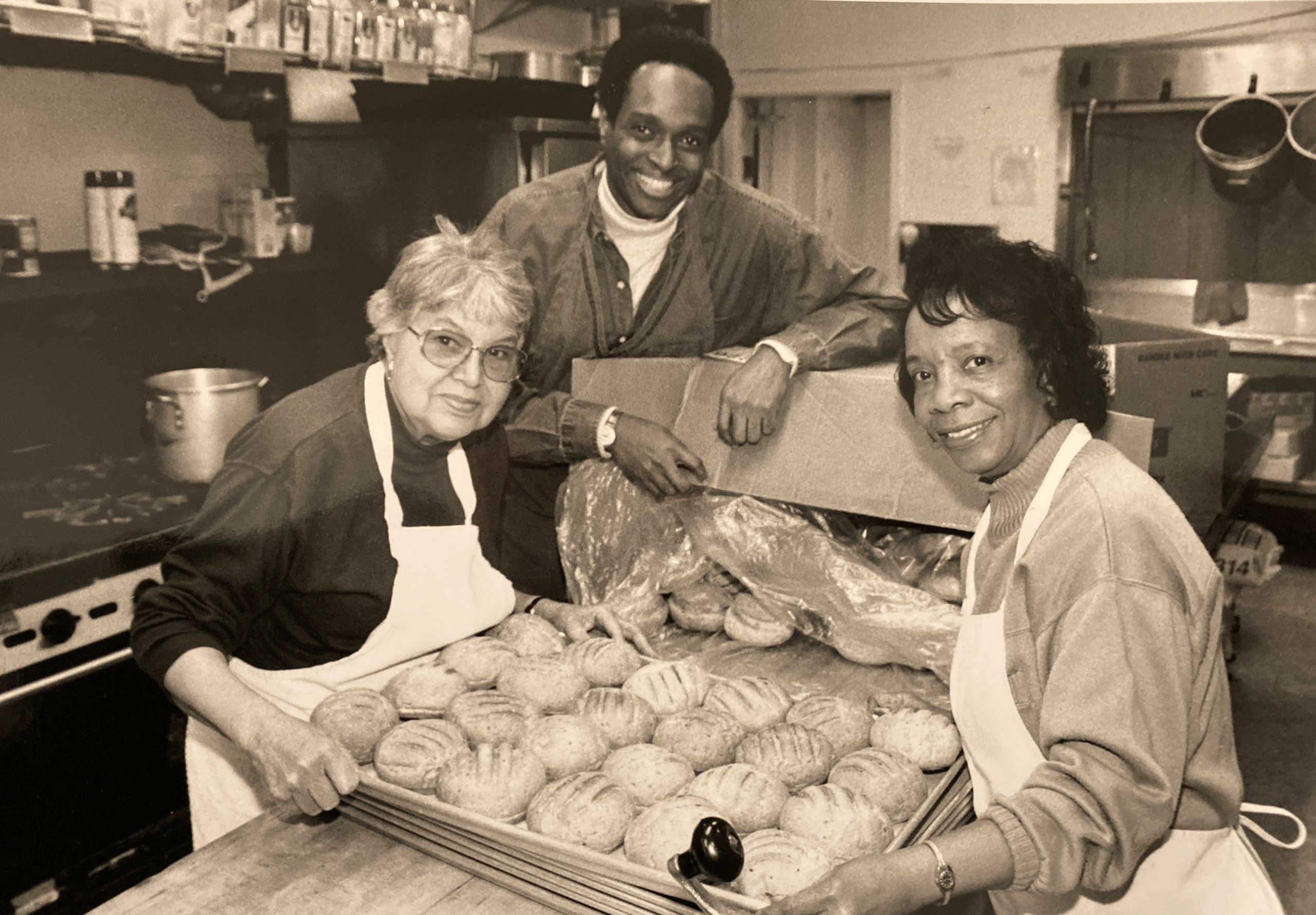
In 1988, Reverend Carla Gorrell of Westminster Presbyterian Church shared that same desire to act. She convened church leaders and community members to imagine a way to respond to the growing epidemic. From that meeting came a simple but radical idea: to deliver meals to people living with AIDS who were too sick to shop or cook. A few supporters provided startup funds, and in an extraordinary early show of solidarity, 21 local restaurants offered to donate meals—one a day, five days a week. Westminster Presbyterian donated their kitchen and office space. From those humble beginnings, Food & Friends was born.
“The restaurants were the first to say yes,” George says. “That still amazes me. At a time when there was so much fear and ignorance, they responded with generosity and action.”
Food & Friends began as a lifeline to people living with AIDS, offering medically tailored meals delivered with care and dignity. But from the very beginning, the work was about more than food.
“Every meal we delivered told someone: You matter. You are not forgotten,” George says. “That kind of care—quiet, consistent, loving—was as important as the nutrition itself.”
Over the years, Food & Friends expanded to serve clients with cancer, ALS, kidney failure, diabetes, sickle cell disease, and other serious illnesses. But the organization’s roots in the HIV/AIDS epidemic and the LGBTQ+ community continue to shape its mission and values. For George, his decades of service are a tribute to the friends he lost and the resilience he witnessed. “I’ve lost too many friends to AIDS. I carry their memory with me in every meal we deliver. This job, this mission—it’s how I honor them.”
Every year on World AIDS Day, George pauses to reflect—not only on the lives lost, but on the transformation that came from the community’s response. He often turns to the lyrics from RENT: “How do you measure the life of a woman or a man? In love.”
The epidemic, George says, was a tragedy—but also a reckoning. It also demonstrated the power of grassroots compassion. “We learned that you don’t need to be a doctor or a policymaker to make a difference. You just have to show up. That’s what I did. That’s what Food & Friends did. And it’s what we continue to do.”
Looking ahead, George encourages the next generation to carry that same spirit of care and action. “Every act of care matters. A meal. A visit. A kind word. Those things echo. They save lives.”
After more than 25 years at Food & Friends, George still shows up every day—because the work continues, and so does the love. “I couldn’t look away,” he says. “I still can’t.”