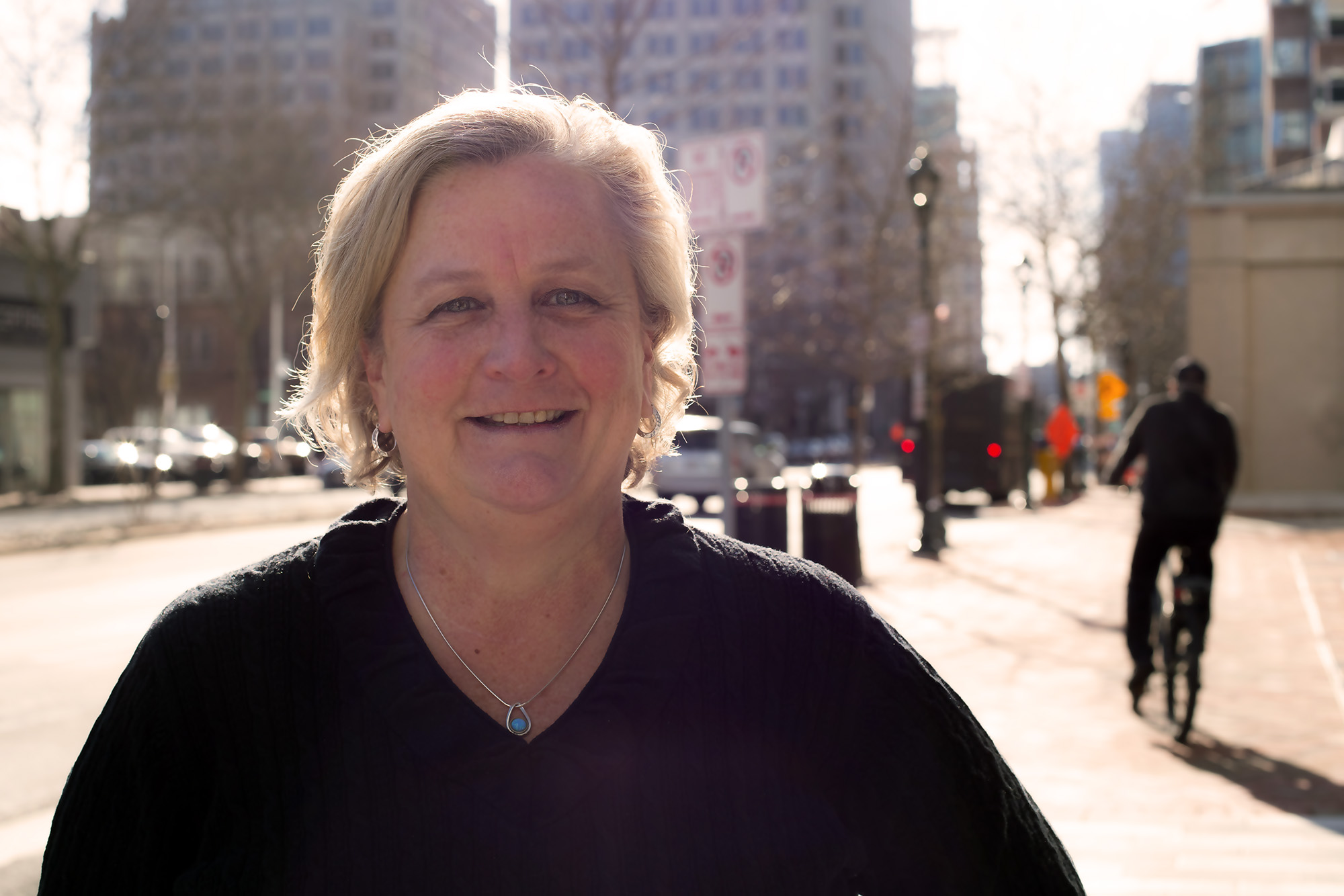
Prior to the pandemic, everything was going great for area-native Deb Whalen. Deb, and her wife of 30 years Stephanie, were making big plans for an upcoming vacation. Deb was also looking forward to moving into her new office at the beautiful new headquarters her company was building. Spirits were high on her entire system finance team.
When Deb got the news that everything was shutting down, she knew it was going to spell trouble at work. She works in the hospitality industry, and she knew they would be hit hard. It was not long before Deb received the tough but expected news that she was going to be furloughed, with no work return date in sight.
But Deb did not have any time to mope in quarantine. The news about COVID-19 was alarming. Everyone was afraid to leave the house; wiping down cereal boxes with disinfecting wipes and hunting down hand sanitizer bottles like they were buried treasure. For people with health risks, the pandemic was even more terrifying. For people who were well, like Deb, there was a new set of responsibilities to help protect their loved ones and neighbors with an elevated health risk.
Deb’s sister Susan became ill with long-COVID and struggled to take care of her 11-year-old daughter, Laney. Her parents Mary and Jack could not even leave the house for fear of hospitalization or death. Mary has chronic obstructive pulmonary disease and heart issues, though she never smoked. Deb knew she had to rise to the occasion and overcome the challenges for her family. Every week she braved the aisles of the supermarkets to provide food for her sister, niece, and parents. You could hear a pin drop at Safeway as people weaved between aisles, darting around corners to maintain proper distance.
Her parents are the kind of people often associated with the American dream, and the post-war boom. Her dad Jack was in the Army and the family migrated to the region when he was shipped to Walter Reed National Military Medical Center. His primary business was managing estate sales, and Deb’s mom Mary worked for the federal government in an administrative role.
Jack and Mary met on a blind date in 1962. The day of their first date, Mary was riding in a car with a friend of hers when they saw a man riding in a convertible with a giant teddy bear. She told her friend: “look at this jackass riding with a teddy bear.” Two hours later, she was sitting across a table from him on a first date. Not even a giant pink teddy bear could get in the way of their romance, and a year later, they were married. 60 years later, that love continues.
Given Mary’s high risk for COVID complications, Deb did not want to gamble with infecting them, so she would leave boxes of food and supplies in the garage, but Jack did not know the first thing about cooking. Meanwhile, her sister Susan’s long-COVID continued to rage, and she was not well enough to return to shopping duties. Deb was stressed, sometimes afraid, hauling overflowing carts with enough food for six people.
“I just wanted to make sure my parents, sister, and niece had enough. There were days I had to take my mom to appointments with her big oxygen tanks in the car. I would be looking for meals that were easy enough for my dad to heat up, but still nutritious and good to eat. My dad was homebound as well with some health issues of his own.”
Deb was running on adrenaline, masked up, operating in fight or flight mode. In the grocery store, people were eyeing her overflowing carts judgingly, not knowing she was grocery shopping to feed her entire family. Money was running low. She did not know the next steps at work, and it was weighing on her mind, but not knowing what was next allowed her to throw the full force of her efforts into caregiving.
Before she reached a breaking point, Deb decided to contact the Senior Center in Rockville for advice. She had heard good things about their resourceful staff. A helpful member of the support services team at this active community center kindly gave Deb the number for Food & Friends. Deb had supported workplace-giving fundraisers benefiting Food & Friends, but had no idea we could be of help to her parents until that point.
She called Food & Friends and remembers hearing the reassuring and confident voice of Intake Coordinator, Maggie Snow. Maggie instantly sent all the forms to Deb, who filled them out herself. Since referrals are based on illness, her mom’s doctor’s office verified Mary’s medical need.
But at this point she was still worried about her dad, until Maggie told her that Food & Friends not only home-delivers enough freshly prepared meals for the person in the household with a serious illness, but also for their caregivers and dependents. Deb instantly felt a weight lift off her shoulders.
About one week later, a Food & Friends delivery driver arrived at Mary and Jack’s door, with a mask and gloves and made their first contact-free delivery. Ever since, Deb’s parents have been relying on Food & Friends for freshly prepared medically tailored meals, and it is working out wonderfully for the family.
Deb’s sister Susan got better slowly and was able to take care of everything for Laney again. Deb returned to work at her company, whose sales rebounded past pre-pandemic levels. Things continue to look up, and she is ready to pack her bags and take that long-awaited vacation with her beloved wife Stephanie.
“The relief when Food & Friends came in was huge. I want you to know how much programs like Food & Friends matter, they did a fantastic job. The work cannot be easy, and the people are in it for the mission,” observes Deb.
When you support Food & Friends, you are extending care to someone close by, and the nourishment you provide creates a positive impact for neighbors like the Whalen’s, and thousands of other families across the region. Please consider making a gift today!
DONATE