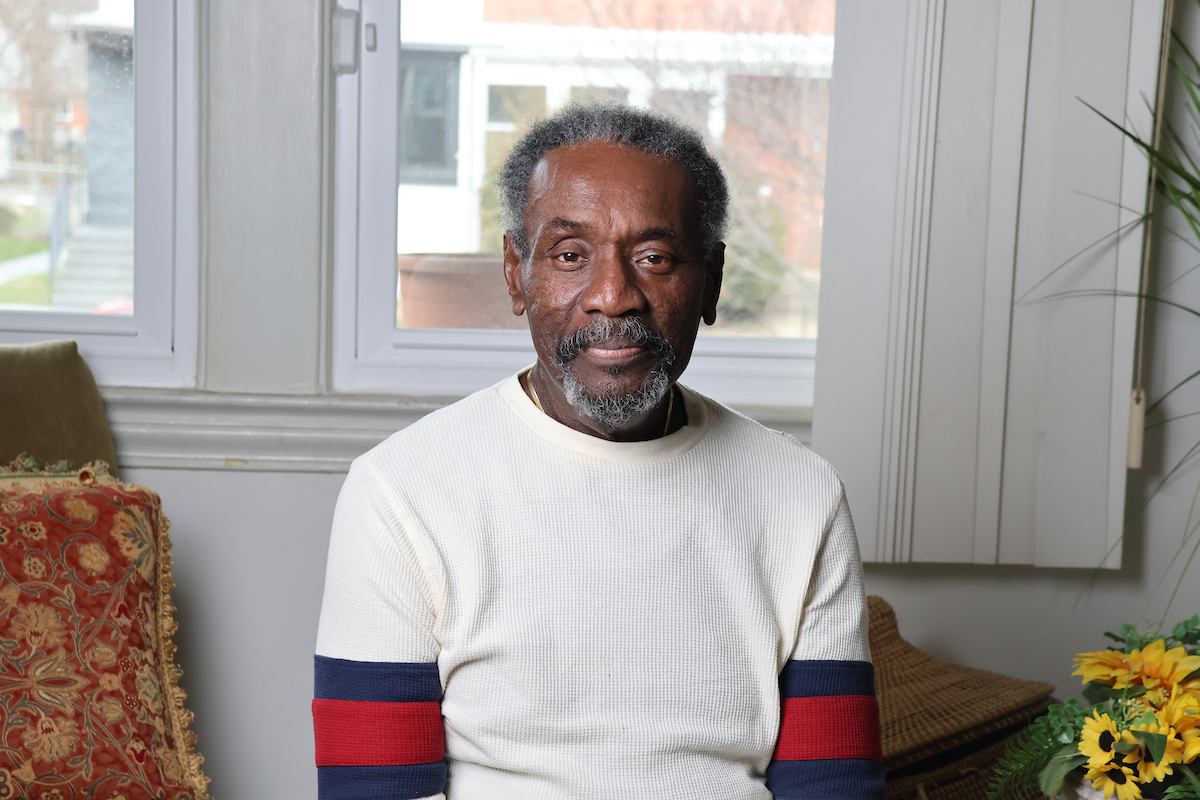
Howard Wright has spent his life showing up for others. Born and raised in Southeast Washington, D.C., he comes from a large, close-knit family—one of eight siblings, now a father of eight himself, with 13 grandchildren and two great-grandchildren. His life has been rooted in service, both personally and professionally. As a peer specialist at a local family medical center, Howard works on the front lines helping people navigate addiction, homelessness, and complex life challenges. On any given day, he connects multiple individuals to the resources they need to rebuild their lives. “I enjoy going out in the field, helping people who can’t help themselves,” he says.
Before his diagnosis, Howard describes himself as energetic and comfortable in his own skin, even while acknowledging he carried extra weight. But in October 2023, everything changed. After struggling to swallow and realizing something was seriously wrong, he went to the doctor and received a diagnosis of esophageal cancer. The news was devastating. “The first thing that comes to your mind is death,” he recalls. The diagnosis sent shockwaves through his family, especially his oldest daughter, Domineke Douglas, and his siblings, who became his emotional backbone during the most difficult moments.
Howard’s treatment journey was intense. After surgery and a recurrence of the cancer, he underwent 15 weeks of chemotherapy and radiation, alongside heart surgery earlier that year. The side effects were severe. He lost over 200 pounds, dropping from 279 to just 74 pounds. He couldn’t eat solid food and relied on nutritional drinks for months. Weak and unable to maintain his strength, Howard had to relearn something most people take for granted: how to eat.
It was during this critical time that he was introduced to Food & Friends. Recommended by his hospital nutritionist, Howard reached out as soon as he was discharged. That connection marked a turning point in his recovery.
Working closely with his dietitian, Matthew Walker, Howard began to rebuild his relationship with food. “Matt really helped me out,” he says. “He introduced me to pureed food that could help me eat better. I didn’t really know how to eat after only drinking for so long.” With guidance and patience, Matthew helped Howard understand not just what to eat, but how to eat safely and effectively given his condition. “He taught me everything,” Howard says. “With his guidance, he enlightened me.”
Through Food & Friends, Howard received medically tailored meals that supported his recovery and helped him regain strength. “Food is medicine for me,” he explains. “The proteins give me the strength to do things. The food helps me with my goals to get strong again.” Slowly but steadily, he began to feel like himself again. His energy improved, and with it, his outlook.
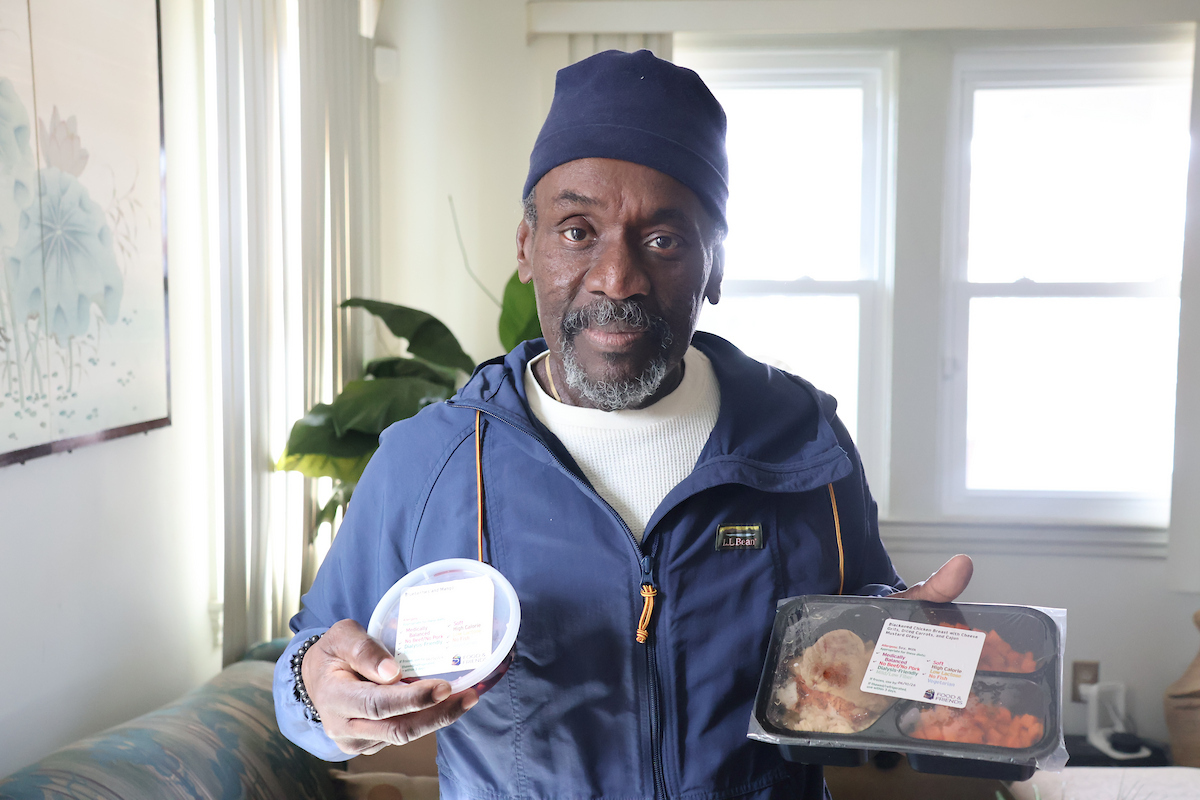
Howard Wright holds medically tailored meals
The impact extended beyond his cancer recovery. Within six months, Howard saw dramatic improvements in his overall health. Conditions like diabetes and high blood pressure, once serious concerns, were brought under control. “I was a ticking time bomb,” he says. “Now everything is gone. I couldn’t wait to call home and tell everybody.”
Today, Howard continues to rebuild, taking things one step at a time. He dreams of getting back on his bike and returning to the long walks he once loved. Even in the face of another recurrence, his mindset has shifted. “I’m going to have to start over again,” he says, “but I think my mindset will be much better because I have the tools and I have Food & Friends.”
Reflecting on his journey, Howard is clear about the role Food & Friends has played in his life. “When you have cancer, you lose everything. I didn’t know how to eat anymore. With Food & Friends, it really helped me because I had to start from scratch. When I learned, I learned through them.”
For others facing similar challenges, his message is simple but powerful: “They guide you. They teach you how to eat the right way, and they have the right food. I 100% recommend listening to the dietitians and learning from them.”
Howard pauses, then adds, “I’m an example of someone who needed help—and they were there for me 100%. The emptiness I felt, they filled that hole up.”