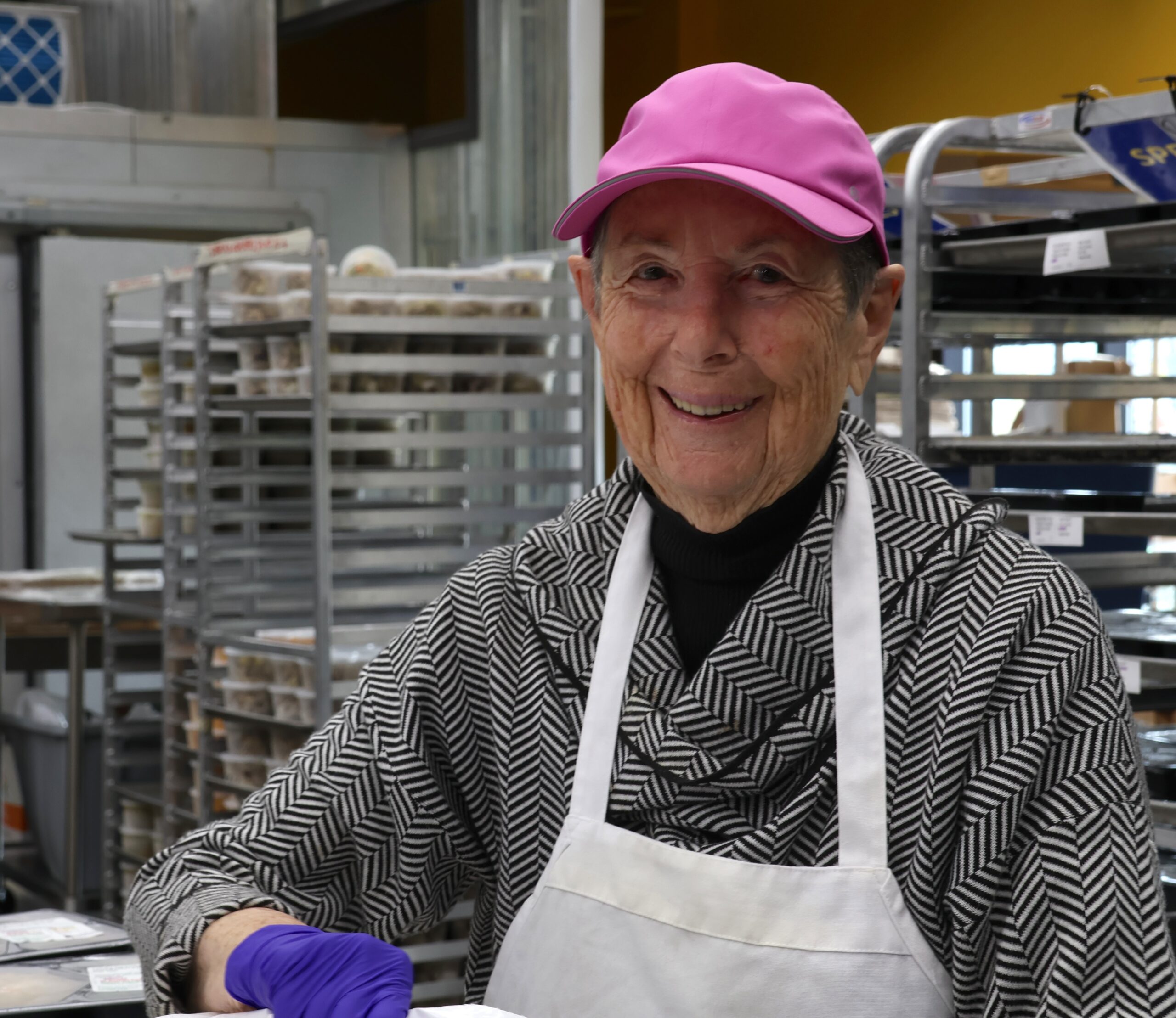
People often ask 96-year-old Rita Bloom how she manages to stay so active and spry at her age. Her answer is simple: the meaningful, joyful volunteer work she does each week at Food & Friends.
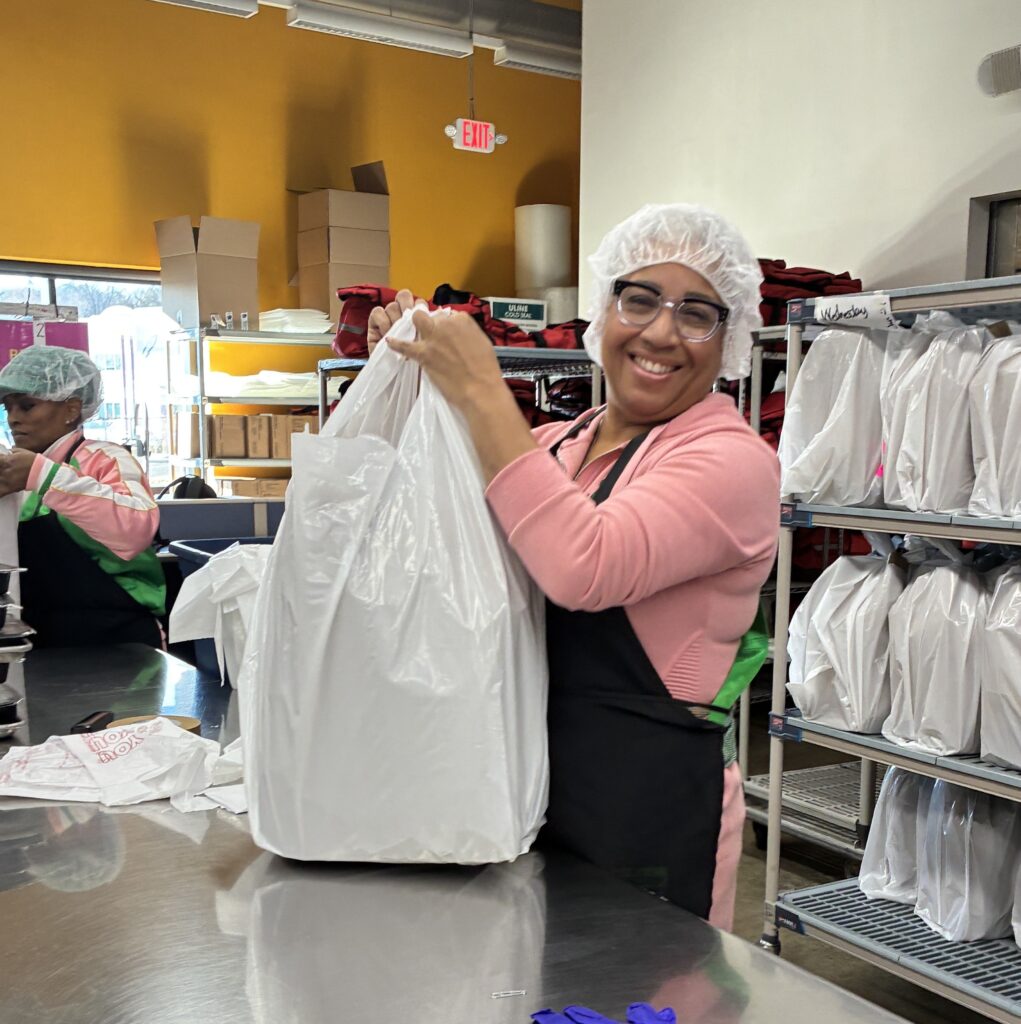
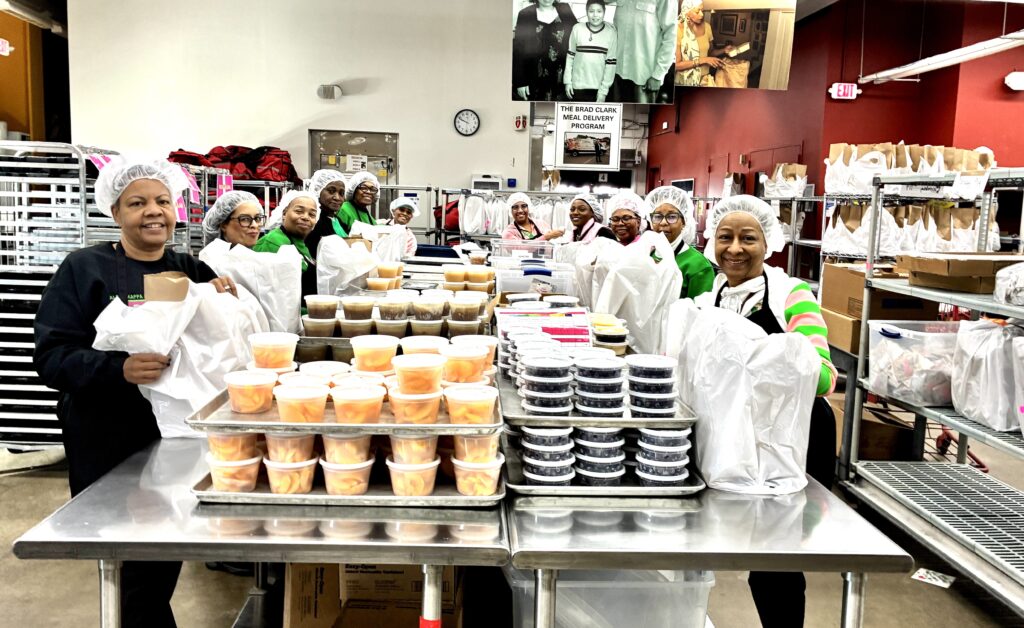
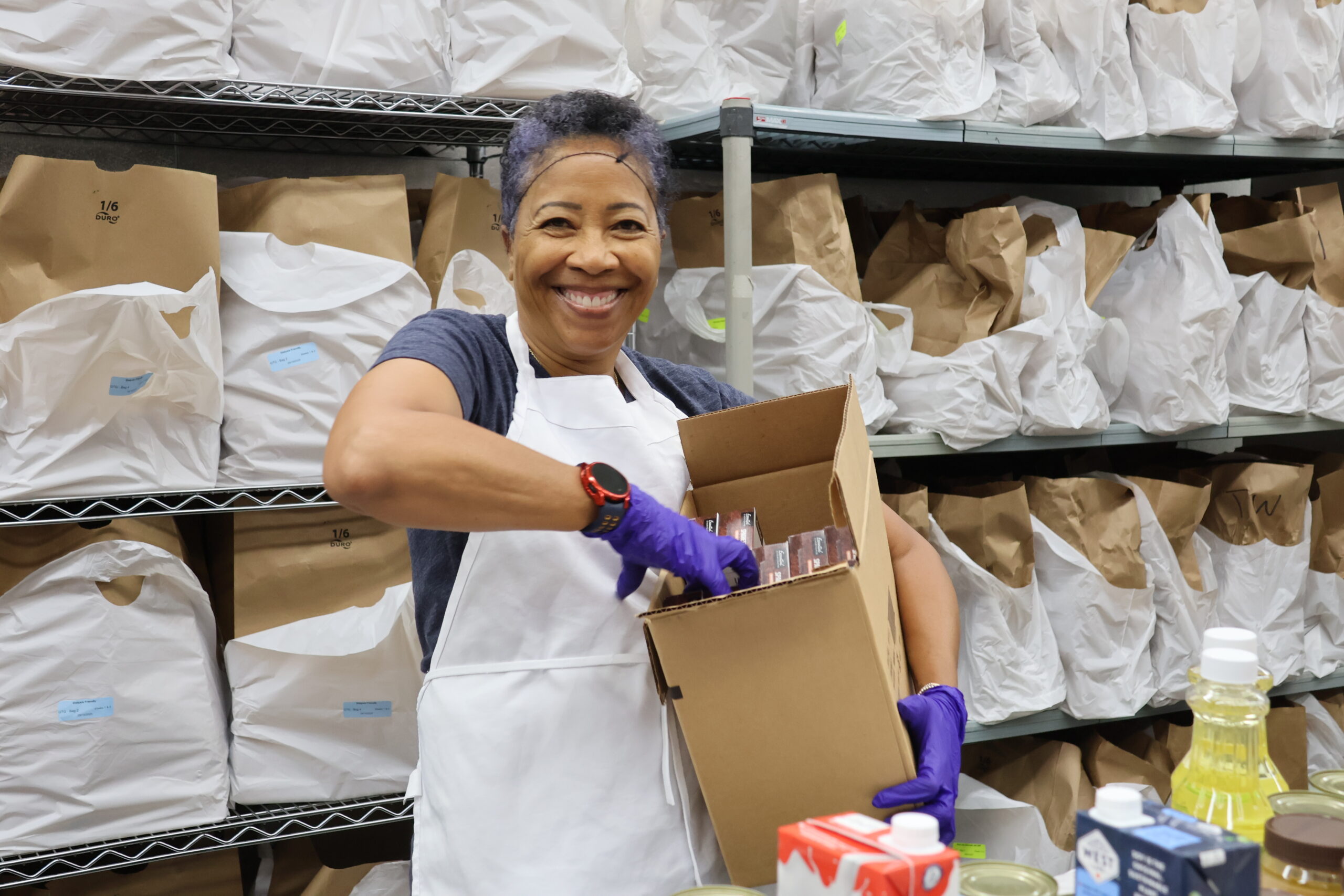
Every Tuesday, Rita helps pack medically tailored meals for individuals living with cancer, HIV/AIDS, and other serious illnesses, as well as for their families. The great-grandmother stands for the entire three-hour shift, chatting with fellow volunteers as she sets up bags in an assembly line.
“Our work makes a difference, and that feels good,” Rita said. “All these things make me feel better emotionally and physically…. Feeling good is one of the things that keeps you healthy.”
Rita Tells Her Story
Rita, who lives in Wesley Heights in D.C., began volunteering at Food & Friends at age 94 with her synagogue, Washington Hebrew Congregation. She was immediately struck by the organization.
“Food & Friends is above all others in efficiency, their attitude, the staff, the volunteers. You go here and there is a job for you that you know makes a difference,” Rita said.
She soon began coming back every Tuesday, in addition to volunteering when her synagogue organized group shifts. Over time, she formed close friendships with the regular volunteers on her shift – Alice Bishop, Deb Spears, Matthew Sherring, Dan Ferguson, Marcia Frank, Kari Cohen, and Jose Martin Miranda – so close, in fact, that they threw her a 96th birthday party.
Rita’s commitment to staying engaged and contributing to her community reflects a lifelong pattern. Decades earlier, she was a pioneer in the event planning industry, starting her own business in 1968, when the women’s movement was still nascent and event planning was not yet a common profession. At the time, Rita said, a wife often needed her husband’s permission just to make an expensive long-distance phone call.
A mother of four, Rita was inspired in part by reading The Feminine Mystique by Betty Friedan. The book, she said, “opened up a whole world to me” and motivated her to return to college. Soon after, she launched Creative Parties Ltd. after helping a neighbor plan a Sweet Sixteen at the brand-new Watergate Hotel. With guidance from a friend in New York—now a 77-year-long friendship—the event was a success. At her next job, Rita charged $25 to manage the event, a fee that exceeded what doctors reportedly charged for house calls at the time.
Her business grew quickly. At its peak, Creative Parties Ltd. employed 22 people and operated out of a storefront in Bethesda.
“I didn’t go into it for money. At first it was helping people,” Rita said. “I didn’t know where that path was going to take me…. I worked hard, and I had a wonderful time.”
Rita, who was born in D.C., retired at age 83. Today, her daughter Tracy Schwartz owns the business, which has been featured in Brides Magazine, The Washingtonian, and the Washington Business Journal. A grandmother of three and great-grandmother of two, Rita still keeps a full schedule when she’s not volunteering — swimming, playing bridge, and hosting social gatherings.
Volunteering at Food & Friends, she says, gives her what so many experts recommend for healthy aging: a reason to get up, a place to be, and people to connect with. “There’s always time for a laugh or two and a hug,” she said.
“It’s joyful,” Rita added. “It gives me value, making me feel I’m really making a contribution that is important.”
Rita readily acknowledges her good health. During a nearly two-hour interview, she stood the entire time without shifting her weight or leaning against anything.
“I stand a lot. It doesn’t even faze me,” she said. “I never look for a place to sit down. I don’t even think about it.”
That same mindset applies to walking. It’s not uncommon for Rita to walk the half mile to Food & Friends from the Fort Totten Metro station after taking the bus, even though the organization operates a free shuttle that many volunteers and staff decades younger regularly use.
“Why would I need the shuttle?” she asked. “That’s an easy walk.”
Rita says, volunteering gives her something priceless.
“I think about what’s important to me at this point in my life and who I am,” she said. “One of the things I do have is the ability to give.”
She calls volunteering “selfish,” because of how much she receives in return.
“At the end of the day when I walk away, I know that I helped,” Rita said. “I contributed to something specific, and that makes it special. It’s very real.”